Agni is a Sanskrit word. It means fire — and it means purity. In the older traditions some of us grew up around, fire is what cooks food, what cleanses, what gathers people in a circle. The kitchen, in that older sense, was the heart of the home. The one room where what mattered was actually made by hand.
That meaning — fire as warmth, fire as purification, fire as the place where a day's most important small act happens — is the one we keep returning to. It's why the brand is called what it is.
We are women in different stages of life. Some of us bake every weekend. Some of us are mothers feeding fussy children. Some of us moved here from elsewhere and grew up in kitchens where every meal was made from scratch because there wasn't another option. Some of us learned to cook late and badly and have spent years getting back what our grandmothers knew without thinking.
We share one observation: the kitchens we live in now in Canada don't really feel like kitchens anymore. Most of what gets eaten under a Canadian roof in 2026 didn't come out of one. It came out of a factory in a soft plastic wrapper, designed by a corporation that has spent a century optimizing for shelf life, addictiveness, and shareholder value.
The cost of that, we are now learning, has not been small.
This is not a wellness blog. We're not going to fear-monger. But the published research is now consistent enough that it's worth saying clearly:
None of this is new. None of this is settled. But the trajectory is clear enough that doing nothing — eating from plastic packets that came from somebody else's factory — is itself a choice with a cost.
We don't think kitchen tools alone fix any of this. The shift back to a kitchen that actually cooks things is bigger than a bread bag. It involves time, learning, money, and political will that none of us individually fully control.
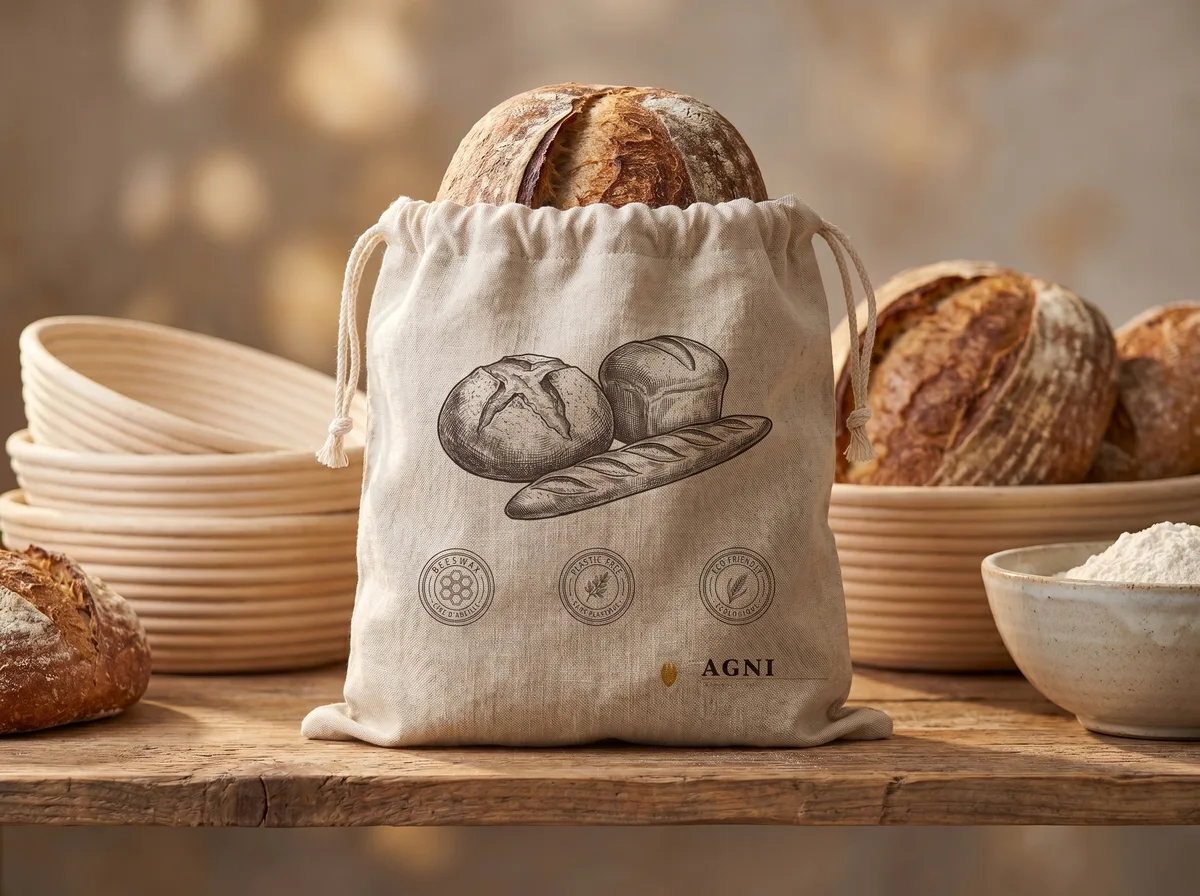
But we've decided we're not waiting for a perfect solution before doing the small available things. The bread bag we make is one of those small things. Our recipes are another. The library we are building — slowly, week by week — of how to bake, how to preserve, how to put up a meal from honest ingredients in a Canadian climate, is a third.
It's a long game. We are okay with that.
Agni is a Canadian-led collective. We are women in our 30s and 40s based in Ontario, with collaborators across Canada and material partners in India and southeast Asia (where the linen, beeswax, and rattan we use are produced by people we have met and whose work we trust).
We do not have venture capital. We are not building a unicorn. We're building something we want to use ourselves and that we hope you will use too. The brand is owned and operated by the women who make the decisions about it. When you write to us at hello@agnishop.com, the reply comes from one of us, not from a chatbot.
Read a recipe. Bake a loaf. Subscribe if you'd like one thoughtful email a week with a new recipe and a small thought to go with it. If a beeswax linen bread bag belongs in your kitchen, we'd be honoured to send you one when we launch on Amazon Canada in August.
Either way — thanks for reading.
— The Agni collective
References cited above
Recipe of the week
A new recipe, the climate notes that go with it, and a paragraph of context. No drip sequences. No promotions. Unsubscribe one click.