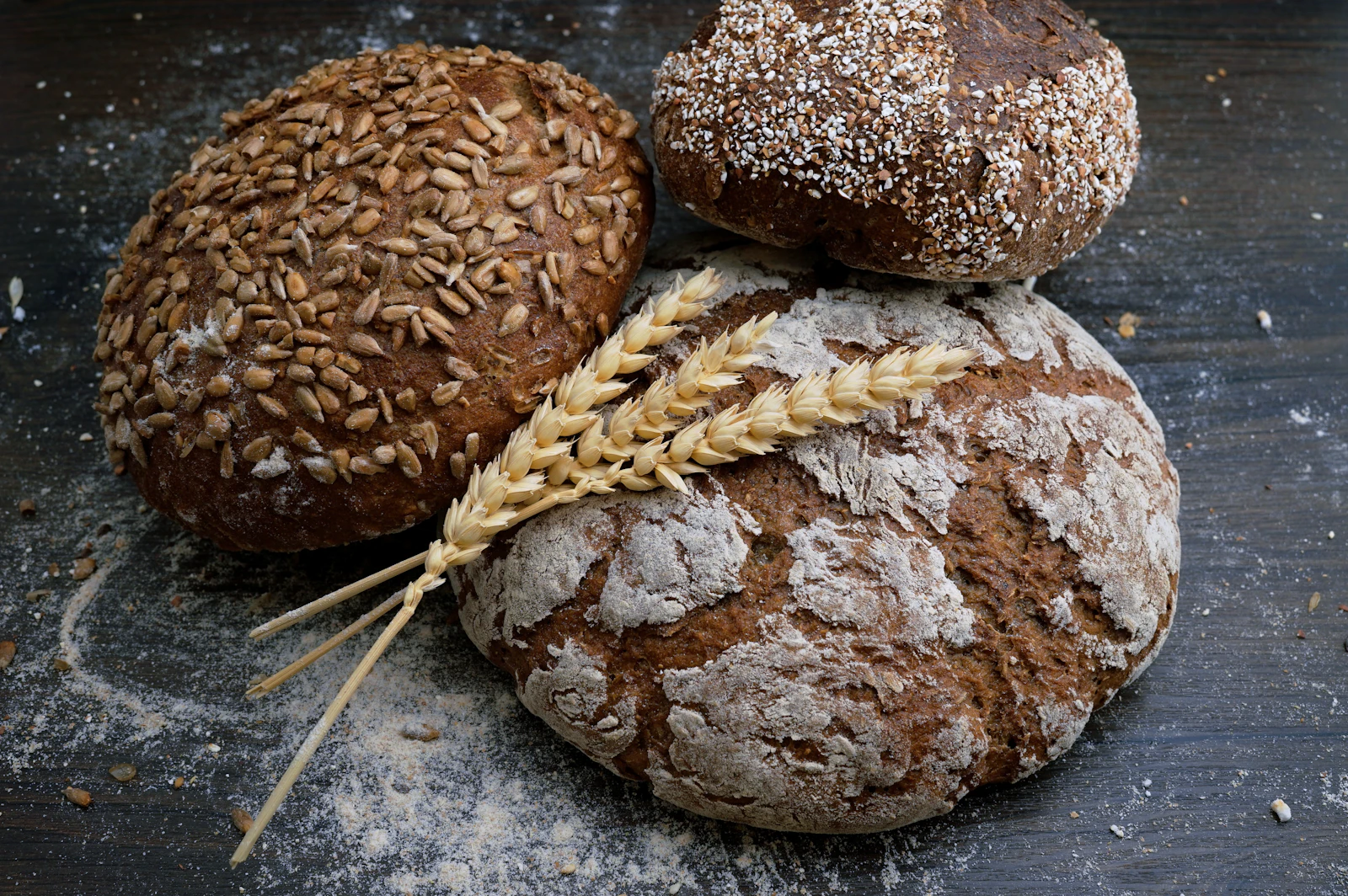
There's a particular feeling you get the first time a loaf of sourdough comes out of your oven the way you hoped. The crust crackles as it cools. The kitchen smells like something old and good. You did this — with flour, water, salt, and time.
This is the recipe we hand to friends who've decided they want to start. It's not the most advanced sourdough on the internet, and that's the point. It's reliable. It works the same in January as it does in July. And it's written for the flours we actually buy at the grocery store in Toronto, Calgary, Vancouver, Chicago, or Seattle — not the imaginary flour in some other recipe writer's pantry.
What you'll need
For one boule
- 100 g (½ cup) active sourdough starter, ripe and bubbly
- 375 g (1½ cups) lukewarm water (~28°C / 82°F)
- 500 g (4 cups) bread flour or strong all-purpose flour
- 10 g (1¾ tsp) fine sea salt
- Rice flour or extra all-purpose flour, for dusting the banneton
A note on flour
If you're in Canada using Robin Hood, Five Roses, or No Name all-purpose (≈13% protein), this recipe is calibrated for you. Use the AP flour straight or use bread flour if you have it. Both work.
If you're in the US using King Arthur, Gold Medal, or Bob's Red Mill AP (10.5–11.5% protein), use bread flour for this recipe — or use AP and reduce the water by 15–20 g (about 1 tablespoon). The lower-protein flour absorbs less.
Specialty flour: a 50/50 blend of bread flour and freshly milled whole wheat (try K2 Milling, Anita's Organic, or your nearest mill) gives a more flavourful loaf with the same method. Increase water by 15 g.
The method
-
Mix and autolyse · 5 minutes hands-on, then 45 minutes rest
In a large bowl, whisk the starter and water together until the water turns cloudy and milky. Add the flour and mix with a wet hand or a spatula until no dry streaks remain. The dough will be shaggy and rough — that's correct. Cover the bowl with a damp tea towel and let it rest for 45 minutes. This is the autolyse: the flour drinks the water, and the gluten starts to organize itself before you do anything more.
-
Add the salt · 2 minutes
Sprinkle the salt over the rested dough. Wet your hand, pinch the salt through, and fold the dough over itself five or six times until the salt is fully incorporated and the dough feels smoother. Cover again.
-
Bulk fermentation · 4 to 8 hours, depending on your kitchen
Over the next several hours, you'll do four sets of stretch-and-folds, spaced 30 minutes apart. To do a set: wet your hand, reach under one side of the dough, lift it up, stretch it over the top, and tuck it down. Rotate the bowl a quarter-turn and repeat three more times. After four sets, leave the dough alone to finish bulking.
The dough is ready when: it has grown by 50 to 70 percent, the surface looks softly domed, and you can see a few bubbles forming at the edges. When you tilt the bowl, the dough wobbles and you can see it's gassy underneath. Don't trust the clock — trust the look and feel.
-
Pre-shape and bench rest · 25 minutes
Tip the dough out onto a lightly floured counter. Use a bench scraper to fold the edges into the centre and flip it seam-down. With your hands on the counter on either side of the dough, drag it toward you in short circular motions to build tension on the surface. It should look like a smooth, taut round. Cover with a tea towel and let it rest 20 to 25 minutes.
-
Final shape · 5 minutes
Flip the rested round onto a lightly floured surface, smooth-side down. Stretch the bottom edge up and into the centre. Repeat with the left, right, and top edges, like folding the corners of an envelope. Roll the dough seam-down and tighten the surface again with the bench scraper. Place the dough seam-up in a banneton dusted generously with rice flour (rice flour resists sticking better than wheat flour). Cover.
-
Cold proof · 12 to 18 hours in the fridge
Slide the covered banneton into the fridge. The cold proof develops the flavour you taste in good sourdough. It also firms up the dough so it's easier to score and slash before baking. 12 hours is fine; 16 to 18 is better. Don't go past 24.
-
Preheat · 45 minutes before baking
Place a Dutch oven (with its lid) inside your oven on the middle rack. Set the oven to 245°C / 475°F and let everything heat together for a full 45 minutes. The cast iron needs to be properly hot for the crust to spring.
-
Score and bake · 45 minutes
Take the cold dough out of the fridge. Tip it gently onto a piece of parchment paper. Dust the top lightly with flour and use a sharp blade or razor to score the surface — one decisive curve from one side to the other, about half a centimetre deep, held at a 45° angle to the surface. Carefully lift the dough by the parchment, lower it into the hot Dutch oven, and put the lid on.
Bake covered for 25 minutes. Remove the lid and continue baking for another 18 to 20 minutes, until the crust is deep amber — closer to dark caramel than golden. The internal temperature should read 96–98°C (205–208°F).
-
Cool fully · at least 1 hour
Tip the loaf out onto a cooling rack. The bread will sing — listen for the soft crackling as the crust cools and contracts. Resist the urge to slice it for at least an hour. The crumb is still setting, and slicing into hot bread collapses the structure you worked all day to build.
Climate notes
Winter in most of Canada and the northern US: indoor humidity drops to 20–30% and kitchens run cool. Add 5–10 g of water to the dough. Cover the bowl with both a damp towel and plastic to stop the surface drying out. Bulk fermentation will take 6–9 hours, not 4.
Vancouver, the Pacific Northwest, the Gulf Coast: humidity stays high year-round. The dough above will feel slightly sticky and that's fine. You can run this recipe at 80% hydration (add 25 g water) once you're comfortable.
Calgary, Denver, anywhere above 1,000 m: reduce starter to 90 g, add 10 g water, and watch bulk closely — fermentation runs faster at altitude.
Summer everywhere: bulk can finish in 3.5 hours. Set a timer at the 3-hour mark and check.
Variations
- Whole wheat sourdough. Replace 150 g of the bread flour with whole wheat flour. Add 20 g extra water — whole wheat drinks more. The crumb will be tighter and the flavour deeper.
- Olive and rosemary. Add 80 g of pitted, halved olives and 1 tablespoon of finely chopped fresh rosemary during the second stretch-and-fold. Excellent with soup.
- Seeded crust. Brush the shaped dough with water and roll the wet surface in a mix of sesame, poppy, and flax seeds before placing seam-up in the banneton.
- Sweetened. Replace 50 g of water with maple syrup. Add 1 teaspoon of cinnamon to the flour. The crust caramelizes deeper. Excellent for French toast.
Storage
A properly baked sourdough boule, fully cooled, will hold for 4 to 5 days at room temperature. The crust is part of how it stays fresh — moisture migrates from the crumb to the crust as the loaf sits, which is why you don't want to wrap a still-warm loaf in plastic.
The right move is breathable storage that lets the crust breathe but slows moisture loss from the crumb: a clean tea towel works for the first day; a linen bread bag is what we use beyond that. We make one because we couldn't find one we liked — but any breathable cloth bag is the principle. Our beeswax linen bag is the version we keep on the counter.
For longer than 5 days, slice the loaf, pack the slices in a freezer bag, and freeze. Toast straight from frozen.
Common questions
Why is my sourdough not rising?
The most common reason is a kitchen that's colder than you think. Most published sourdough recipes assume 24°C, but Canadian and northern-US kitchens in winter often sit at 18–20°C. Bulk fermentation can take 7–9 hours instead of 4. Don't watch the clock — watch the dough. A finished bulk should be 50–70% larger, softly domed, and feel gassy when you tilt the bowl. If it's been 8 hours and the dough hasn't moved, your starter is the problem, not the recipe.
Can I use Canadian all-purpose flour for sourdough?
Yes — Canadian AP from Robin Hood, Five Roses, No Name, or PC runs around 13% protein, which is close to US bread flour. It works beautifully for sourdough at the hydration in this recipe. US bakers using King Arthur or Gold Medal AP at 10.5–11.5% protein should either use bread flour for this recipe or drop the water by 15–20 g (about 1 tablespoon).
How long does sourdough stay fresh?
Cut-side-down on a board or wrapped in breathable linen, a properly baked sourdough boule stays fresh for 4–5 days. A linen bread bag holds crust crispness and crumb texture better than plastic. For longer storage, slice the loaf and freeze.
Do I need a Dutch oven to bake sourdough?
It helps but isn't required. The Dutch oven traps steam during the first half of the bake — that's how the crust gets glossy and the loaf springs upward. Without one, bake on a preheated baking stone or steel and create steam by pouring boiling water into a heavy pan on a lower rack as soon as the loaf goes in.
Why do you store sourdough in linen instead of plastic?
Plastic traps moisture against the crust, which softens it and shortens the loaf's shelf life. Linen is breathable — it lets a small amount of moisture out so the crust stays crisp, while keeping the crumb from drying. The beeswax-coated linen we make at Agni is built specifically for this. Read more about how it's made.